Table of Contents
As the seasons change, many homeowners begin noticing which parts of their gardens could work better. Perhaps a pathway becomes slippery after rainfall, a seating area feels too exposed or an otherwise attractive garden becomes difficult to enjoy when daylight hours shorten.
Thoughtful autumn landscaping can address these everyday challenges while creating an outdoor space that remains attractive throughout the year.
For homeowners in Muswell Hill, Finchley and Barnet, features such as raised planting beds, carefully designed pathways and outdoor lighting can significantly improve how a garden looks and functions.
At Reformed Gardens, we design and landscape outdoor spaces that combine practical construction, attractive materials and planting suited to the individual property.
Here are the key autumn landscaping improvements worth considering.
Why Autumn Landscaping Is About More Than Seasonal Colour
Autumn is often associated with fallen leaves, changing colours and preparing plants for colder weather. However, it is also a valuable time to review the structure and usability of a garden.
When daylight becomes limited and rainfall increases, it is easier to identify practical issues that may have been overlooked during summer.
These can include poorly positioned pathways, areas of standing water, insufficient lighting and planting beds that have become difficult to maintain.
Rather than focusing exclusively on seasonal decoration, homeowners should consider improvements that make the garden easier to use during every season.
A professional landscaping plan can bring together planting, access, drainage and outdoor features into one coordinated design.
Raised Garden Beds: Adding Structure and Practicality
Raised beds are a popular feature in contemporary garden design because they introduce structure while creating useful planting areas.
They can be particularly effective in North London gardens where available space needs to be carefully organised.
Defining Different Garden Areas
Raised beds can separate a patio from a lawn or introduce a natural boundary around an outdoor seating area.
For example, a raised planting bed alongside a dining terrace can soften the appearance of hard landscaping while helping to define the space.
In smaller gardens, this approach often works better than installing numerous standalone planters that compete for valuable floor space.
Choosing Suitable Materials
Raised garden beds can be constructed using several materials, including:
Treated timber selected for appropriate outdoor use.
Brickwork that complements the property.
Rendered masonry for a contemporary appearance.
Natural stone for a more traditional finish.
Each material has different construction, maintenance and cost considerations.
It is important to establish appropriate drainage and use suitable soil depths for the intended planting.
Planning Planting for Year-Round Interest
Raised beds should provide interest beyond the warmer months.
Evergreen shrubs can establish a permanent framework, while seasonal perennials, ornamental grasses and flowering plants introduce changing colours and textures.
Plant selection should account for sunlight, soil conditions, mature plant sizes and maintenance requirements.
Garden Pathways That Remain Practical in Wet Weather
Garden pathways are among the most important functional features of an outdoor space.
A well-designed path provides dependable access between the house, seating areas, lawn and other garden features.
During autumn and winter, surface conditions become particularly important.
Choosing Durable Pathway Materials
Popular pathway materials include porcelain paving, natural stone, gravel and concrete paving.
The most suitable option depends on the intended use and the surrounding garden design.
For example, a frequently used route between the house and a garden office may benefit from a consistent, firm surface.
A decorative pathway through planting beds might accommodate a different material.
When choosing paving, homeowners should consider slip resistance, maintenance, ground preparation and how the finished surface handles rainfall.
Preventing Drainage Problems
Poorly installed pathways can contribute to standing water and uneven surfaces.
Before construction begins, the design should consider ground levels, drainage routes and the relationship between the path and neighbouring planting beds.
Persistent waterlogging may require a wider drainage assessment rather than a simple surface replacement.
Reformed Gardens provides landscaping and garden installation services for homeowners looking to improve the layout and practicality of their outdoor spaces.
Garden Lighting for Darker Autumn Evenings
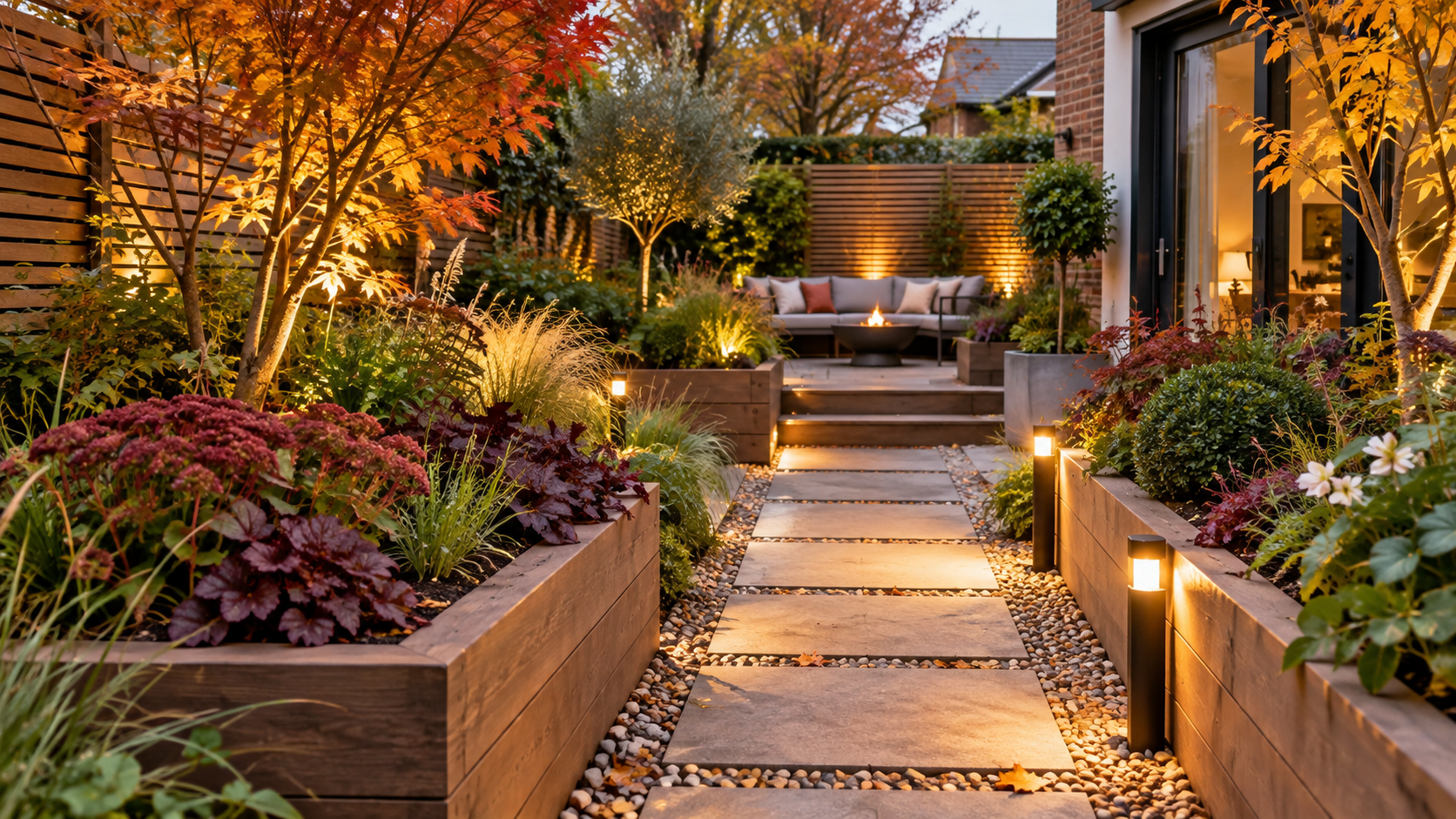
Garden lighting can make an outdoor space more welcoming while improving visibility around essential access routes.
However, effective lighting is not simply about installing more fixtures.
The best lighting designs balance functionality, atmosphere and consideration for neighbouring properties.
Illuminating Paths and Steps
Lighting near steps, entrances and changes in level can help users identify potential hazards.
Low-level fittings can provide useful illumination without dominating the appearance of the garden.
Outdoor electrical work should be appropriately designed and installed by a qualified professional.
Creating an Inviting Seating Area
Warm, carefully directed lighting can make patios and seating areas feel more comfortable during darker evenings.
Lighting beneath raised beds or around selected architectural features can provide subtle visual interest.
The aim should be to highlight the garden’s strongest features without producing excessive glare.
Considering Wildlife and Energy Use
Garden lighting should be directed towards the areas where it is needed.
Timers, sensors and separate controls can help prevent unnecessary illumination.
Leaving some areas dark can also reduce disturbance to nocturnal wildlife.
Combining Raised Beds, Lighting and Paths in One Garden Design
The greatest benefit often comes from planning these features together.
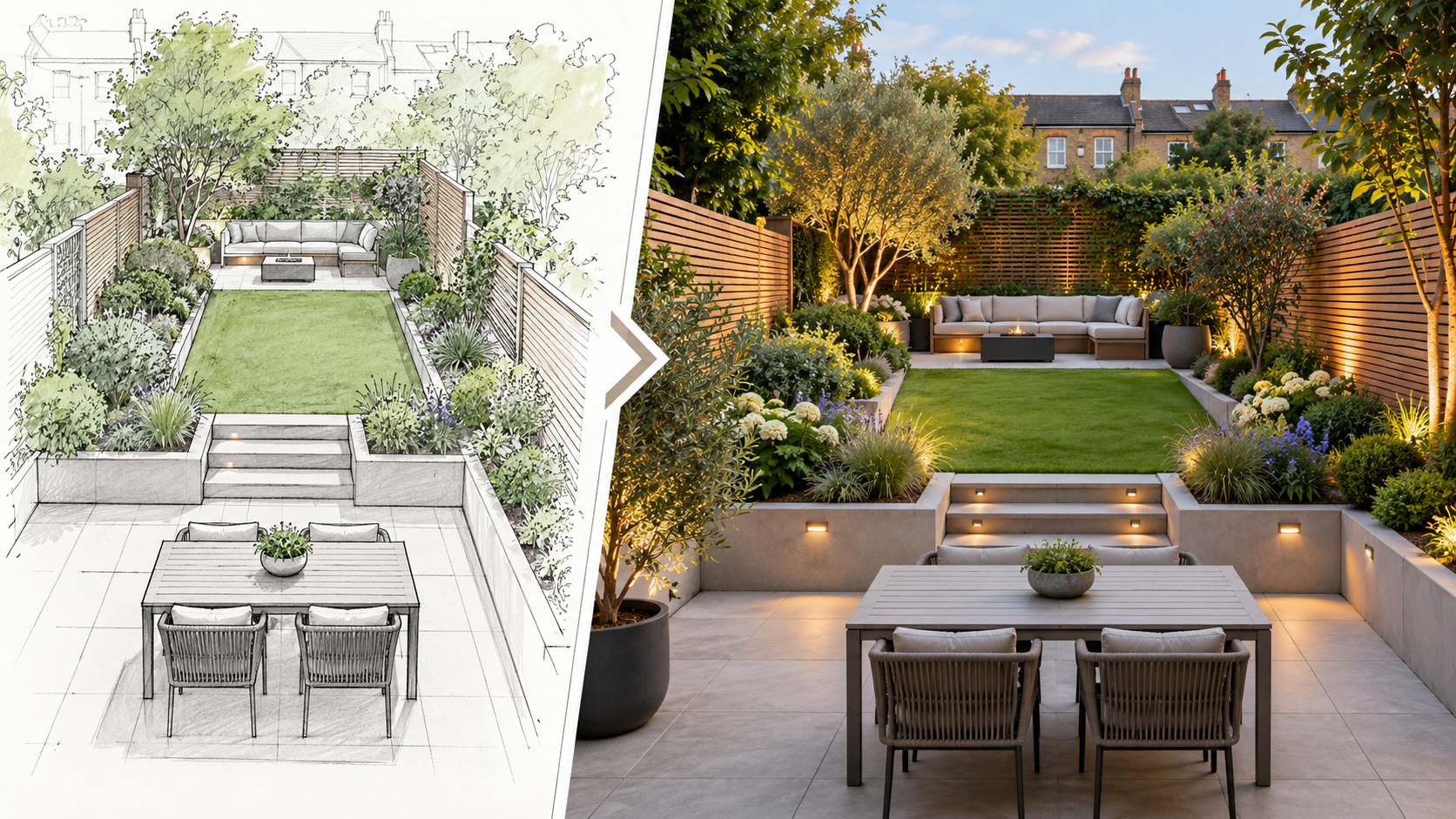
Imagine a garden with a paved terrace beside the house, a clearly defined pathway leading towards the rear boundary and raised planting beds separating the seating area from the lawn.
Carefully positioned lighting can illuminate the main route while highlighting selected planting.
Instead of treating each improvement as a separate project, a coordinated garden design ensures materials, dimensions and levels work together.
Reformed Gardens’ garden design services include detailed layouts and 3D visualisations, helping homeowners explore proposed improvements before construction begins.
This approach can be particularly useful when several landscaping elements need to be installed in stages.
Autumn Landscaping in Muswell Hill, Finchley and Barnet
The right landscaping improvements depend on the property and how the garden is used.
Muswell Hill
Gardens with changes in level or limited privacy may benefit from carefully positioned raised beds, defined seating areas and thoughtful screening.
Finchley
Family gardens can benefit from practical pathways, durable patios and planting beds that help organise lawn and entertaining areas.
Barnet
Properties with more generous outdoor spaces may benefit from connecting different garden areas with coordinated pathways, lighting and planting schemes.
Across these locations, thoughtful design can help homeowners make more effective use of their gardens throughout the year.
Planning and Budgeting for Autumn Garden Improvements
Before committing to landscaping work, establish which features will have the greatest impact.
For some homeowners, improving drainage and access will take priority. Others may prefer to develop a new patio, introduce planting or improve outdoor lighting.
A professional quotation should take account of site preparation, construction materials, access, installation requirements and finishing work.
Where the budget does not allow every feature to be completed immediately, agreeing an overall design can make future improvements easier to coordinate.
Frequently Asked Questions
Is Autumn a Good Time to Install Raised Garden Beds?
Yes, raised beds can be installed during autumn when ground and weather conditions are suitable. Planting arrangements should be planned around the species selected and their seasonal requirements.
Which Materials Are Best for Garden Pathways?
The best material depends on the path’s intended use, maintenance requirements, drainage and the overall design. Outdoor-rated porcelain, natural stone and suitable gravel systems are common options.
Can Garden Lighting Be Added to an Existing Garden?
Yes. Outdoor lighting can often be incorporated into an existing layout, although cable routes, electrical safety and the location of finished landscaping should be considered.
Do Raised Beds Need Drainage?
Yes. Raised beds require appropriate drainage to prevent waterlogging and support healthy root growth. Requirements depend on their construction and the underlying surface.
Transform Your Garden with Reformed Gardens
Successful autumn landscaping is about creating a garden that remains practical, attractive and enjoyable beyond the summer months.
From raised planting beds and durable pathways to carefully designed lighting and complete garden transformations, the right improvements can make a lasting difference.
Reformed Gardens provides professional garden design, landscaping and installation services across Muswell Hill, Finchley, Barnet and surrounding North London areas.
Considering improvements to your garden this autumn?
Contact Reformed Gardens for a free survey and quotation or call 07467 568886 to discuss your landscaping requirements.
Ready to Transform Your Outdoor Space?
Choosing the right plants is the first step toward a beautiful, low-maintenance, and resilient London garden. Whether you are looking for Customised Landscaping Solutions for unusual layouts or a complete transformation through our Barnet Comprehensive Garden Works, our Landscaping Contractors are ready to help.
How Reformed Gardens Can Help
We offer comprehensive landscaping services in London, from initial design to full construction. Our experienced team blends creativity with technical expertise to deliver gardens that reflect your lifestyle.
Whether you’re based in Barnet, Mill Hill, or Muswell Hill, our landscape gardeners provide solutions tailored to your space and preferences.
Related Blog: How to Blend Functionality and Aesthetics in Garden Layouts
A garden room is better if you need enclosed space for work, fitness, hobbies or year round use. A pergola is better for shade, dining and summer entertaining.
Yes. A pergola can define an outdoor kitchen area and make it more comfortable for cooking, dining and hosting guests.
Often, yes. Good paving connects the feature to the rest of the garden and makes the space easier to use and maintain.
It depends on the design, but most gardens need seasonal cleaning, pruning, watering while planting establishes and occasional checks on features or structures.
Yes. Reformed Gardens can support garden design, patios, paving, water features, outdoor kitchens, garden rooms and maintenance planning.