Small outdoor spaces in Mill Hill often require creative design to make them both functional and beautiful. This guide covers smart garden design ideas, helping you optimise your outdoor area to create a relaxing, usable space that feels much larger than it is.
If you want to see the kind of finishes we deliver across North London, explore our Projects.
Common Pressure Points in This Topic
Limited space and awkward garden shapes that hinder functionality
Difficulties in creating a cohesive design that balances planting and hard landscaping
Managing drainage effectively in smaller gardens to avoid water pooling
Desire for a stylish, low-maintenance garden that enhances property value
Need for privacy from neighbouring properties and high foot traffic
What This Guide Will Explain
We will dive into practical garden design ideas and landscaping tips that make small gardens feel spacious and inviting, with an emphasis on hard landscaping, layout strategies, and integrating lighting for a seamless outdoor experience.
Why Reformed Gardens is Qualified
Reformed Gardens specialises in garden design and landscaping across Mill Hill and Greater London, offering expertise in creating functional outdoor spaces with thoughtful landscaping and hardscaping features that stand the test of time.
You can view our full Services.
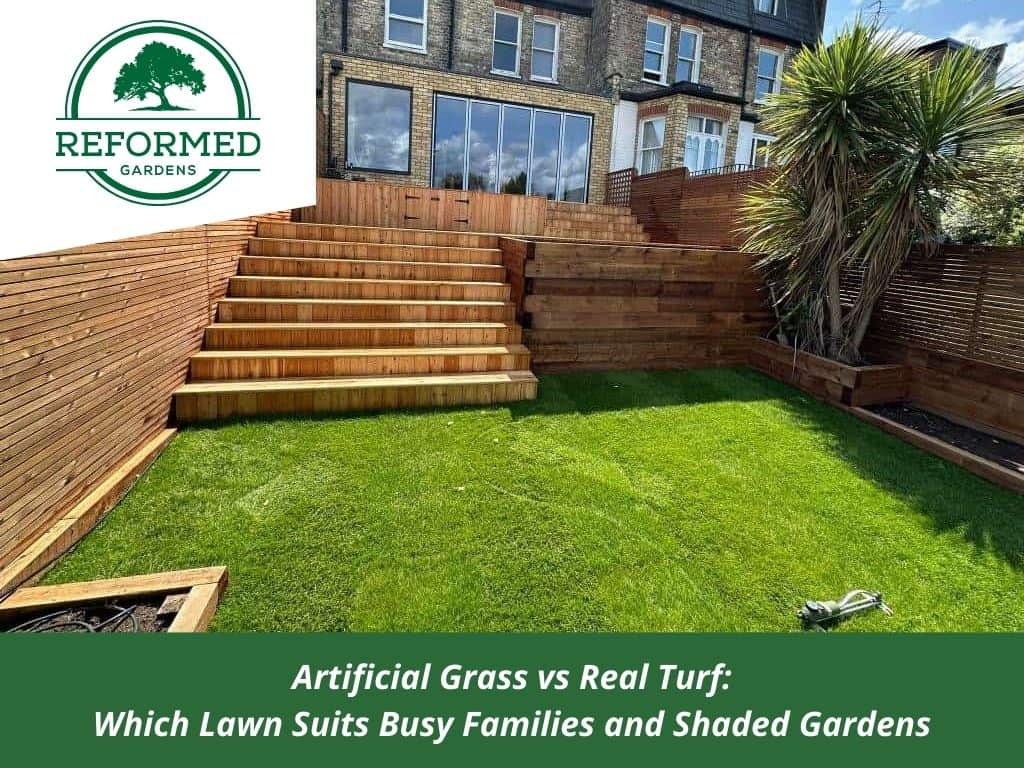
Garden Design Ideas Mill Hill
Designing a small garden requires careful planning. In Mill Hill, many homeowners face the challenge of balancing function with aesthetics. The key is using clever design techniques to make the garden appear larger while maintaining a visually pleasing layout. Here are a few ideas:
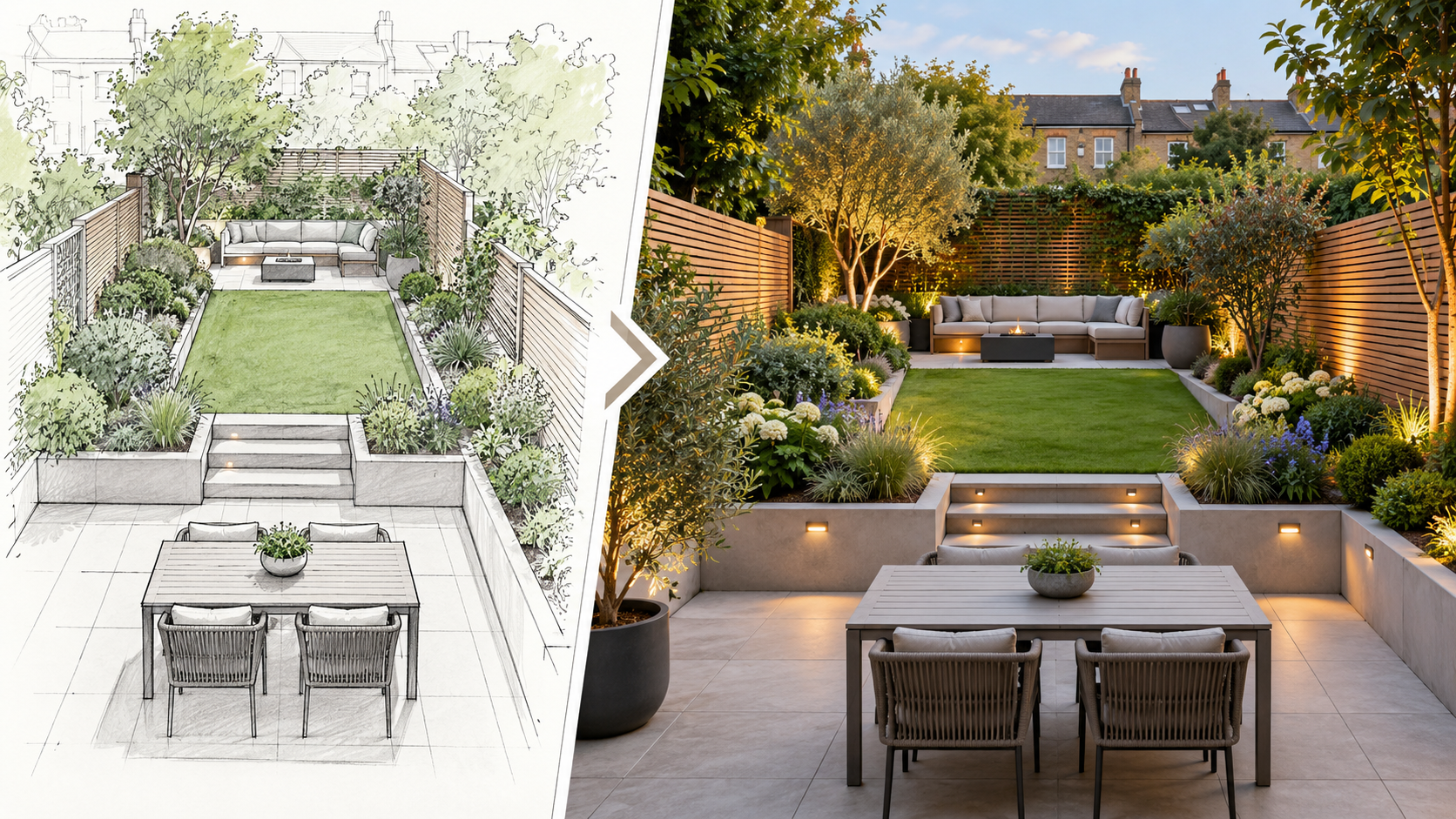
Strategic Garden Zones: A clear division between seating and planting areas helps create a sense of order and space. A main seating area with a small garden feature or path extending beyond can elongate the garden’s appearance.
Simple Leveling: A flat, single-level design makes a garden feel more expansive. For areas with slightly uneven terrain, a small step or raised bed can still be incorporated for visual interest without overcrowding.
Minimalist Design: Avoid over-cluttering by limiting the amount of hard landscaping features. Focus on one key element, like a feature bench, or a larger plant installation that draws the eye upwards.
Build-in Seating: Incorporating a slim built-in bench or seating area within the layout maximises usable space without taking up additional room.
Expert Quote:
“A well-thought-out garden design uses sightlines and smart zoning to expand the space visually. When done right, a small garden feels like a retreat rather than a cramped space.”

Small Garden Design Mill Hill
Small gardens require designs that focus on harmony between planting and hard landscaping. By treating the patio, pathways, and planters as part of the overall garden rather than standalone features, you can create a seamless and elegant look. Here’s how to make it work:
Layout Ideas to Maximise Space:
Use large-format paving stones to reduce the visual clutter of joints.
Keep main paths clear, ensuring there’s enough room for two people to pass comfortably.
Incorporate curved or angled paving edges that give the illusion of more space.
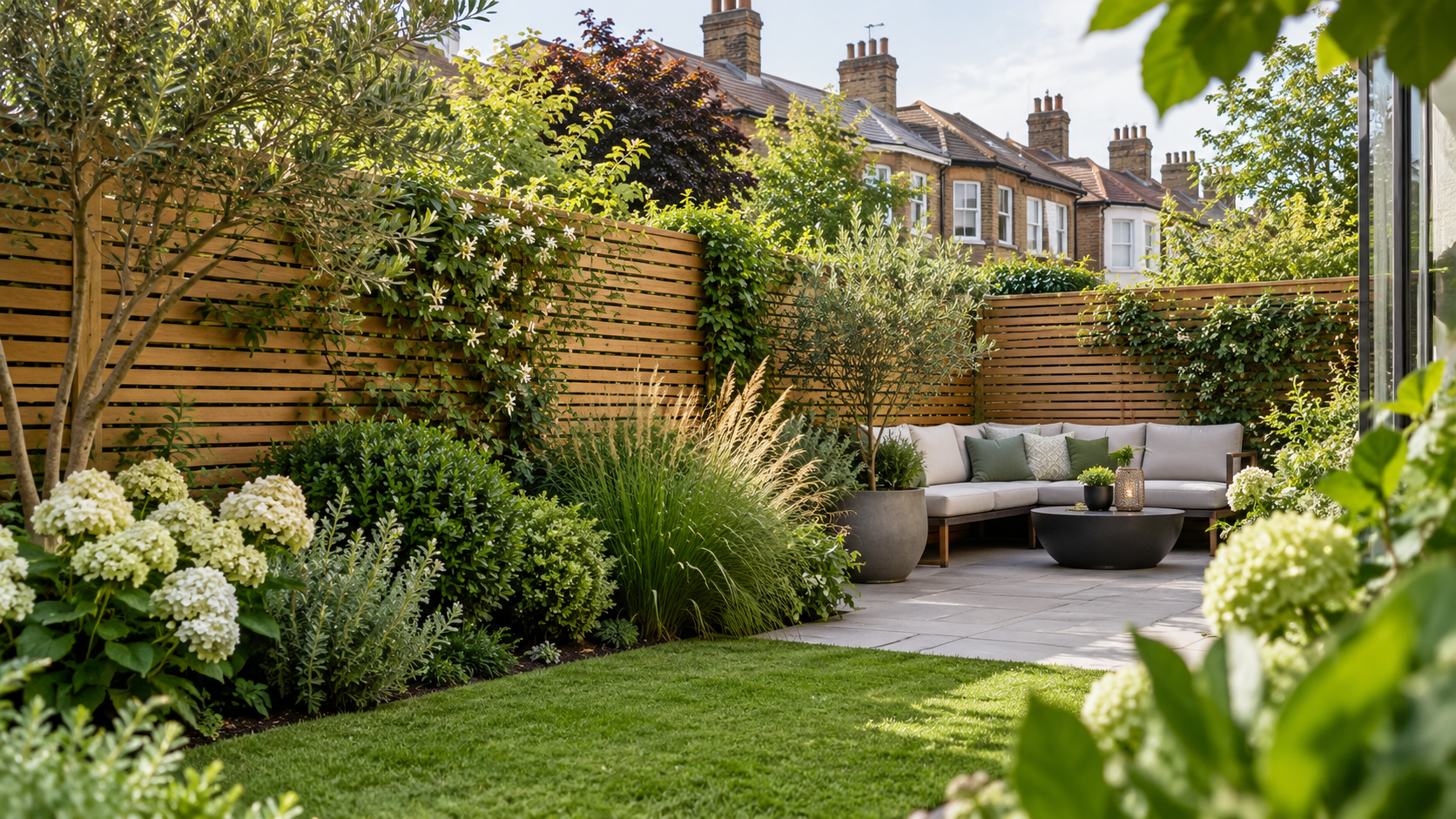
Avoid boxing the patio with large planters on all sides, leaving one edge open with soft planting to help create flow.
Material and Finish Choices:
Light-toned porcelain enhances the feel of openness, perfect for shaded gardens.
Natural stone adds texture and depth, offering a timeless feel underfoot.
Use permeable materials where water management is a concern, especially if the garden has a small slope.
Lighting and Planting Ideas to Extend the Garden:
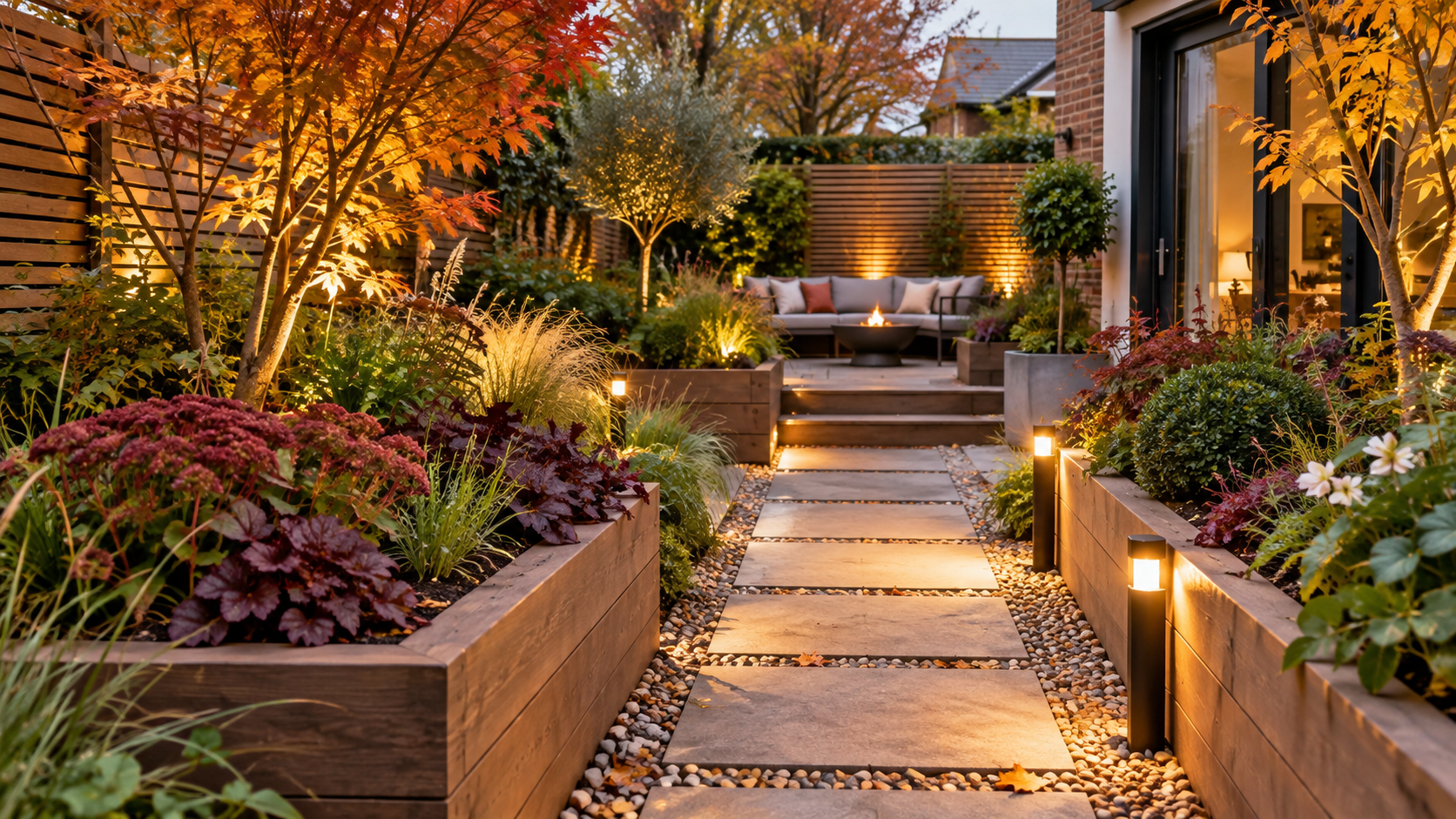
Integrate low-level lighting around the patio’s edges or along pathways to create a welcoming atmosphere in the evenings.
Layer plants by height: low-growing plants near the patio, medium shrubs beyond, and taller plants for privacy where needed.
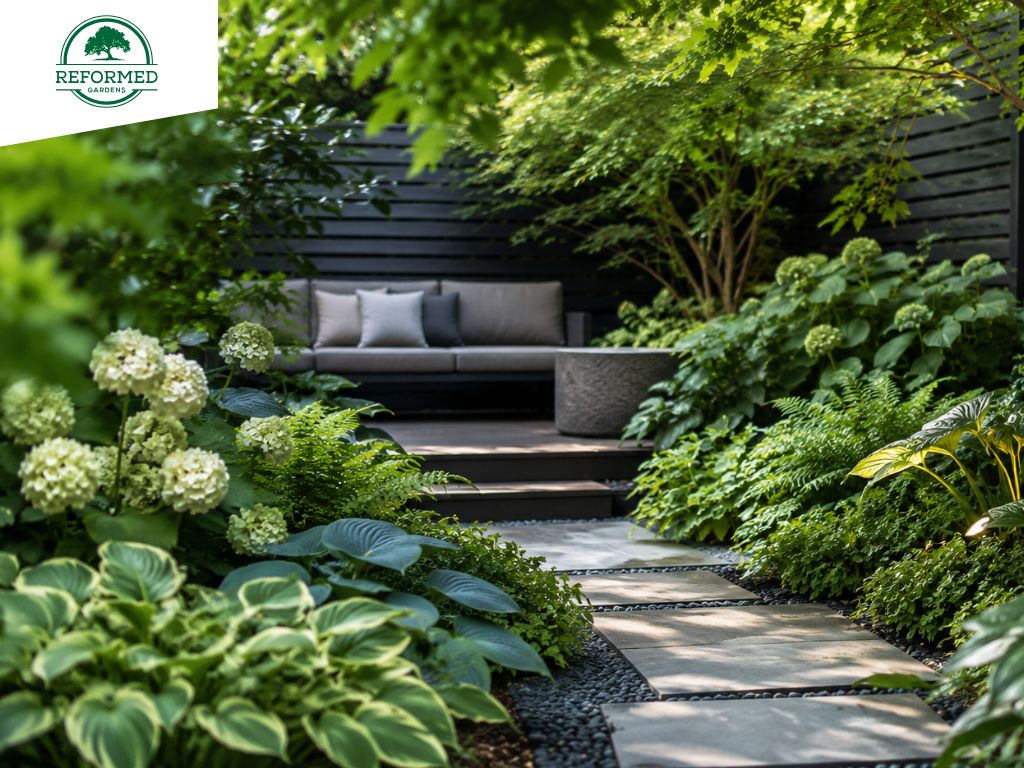
Repeat materials, such as a small matching path or stepping stones, to create the feeling of an extended space.
Add a focal point such as a specimen plant or water feature to shift the focus away from the boundaries.
Next Steps
- Book a Site Visit: Our team can assess levels, drainage, and access to help you make informed design decisions.
- Make Early Selections: Choose materials and finishes early to ensure better cost and time planning.
- Confirm Delivery Route: We help make sure the project goes smoothly, avoiding any unexpected delays.
FAQ
What’s the first step?
Start by booking a site visit so we can assess the space and confirm the best patio position and drainage solutions.
What are the timelines for a project?
Patio projects depend on material availability and preparation work, but with early decisions, we can keep projects on track.
How can I avoid surprise costs?
Confirm any drainage and edging needs early in the process to lock in accurate pricing.
Quality Assurance:
Make sure you understand the scope of work, material specifications, and finish standards before the work begins.