In Muswell Hill and Finchley, many gardens sit in partial shade from mature trees, neighbouring buildings, and rear extensions. Add busy family life, pets, and the reality of London rain, and it is easy to end up with a lawn that looks tired, feels muddy, or demands more upkeep than you have time for.
This guide compares artificial grass and real turf in a practical way, so you can choose a lawn that suits how you actually use your garden, not just how it looks on installation day.
If you want to see the kind of finishes we deliver across North London, explore our Projects.
Common pressure points for lawns in Muswell Hill and Finchley
Shaded areas that thin out and become patchy over time
Muddy zones near doors after rain, especially with children and pets
Wanting a neat lawn without weekly upkeep
Concerns about drainage and water pooling
Sustainability and biodiversity worries, especially with artificial lawns
What this guide will compare or explain
We will compare artificial grass and real turf for shaded gardens and busy family homes, covering maintenance, drainage, comfort, appearance, and long term value. We will also explain the build details that matter most, because the base preparation and edging usually decide whether a lawn stays smart for years.
Why Reformed Gardens is a safe pair of hands
Reformed Gardens installs artificial turf and provides wider landscaping and lawn care services across North London, including Muswell Hill and Finchley. Our approach combines creative garden planning with practical build delivery, so your lawn choice works with the rest of your outdoor space, not against it.
You can view our full Services.
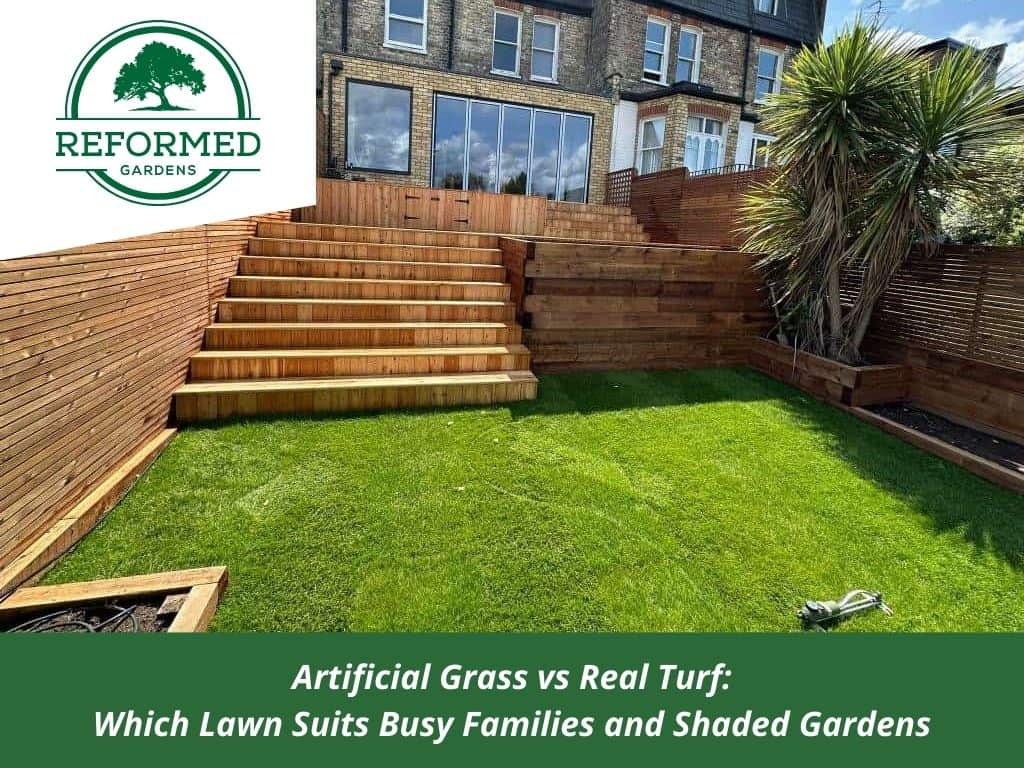
Artificial grass vs real turf Muswell Hill
The right lawn choice in Muswell Hill usually comes down to three things. How much shade you get, how much wear the lawn takes, and how much time you want to spend maintaining it.
Artificial grass is often chosen for busy households and shaded gardens because it stays green without mowing, watering, or seasonal feeding. When installed properly, it can also reduce muddy patches and keep the garden usable through wet weather. The key phrase there is installed properly. A premium finish depends on ground preparation, levels, drainage, and crisp edging, otherwise the surface can feel uneven and look untidy within a year.
Real turf can be a better fit when you want a living surface that feels soft, supports soil life, and works naturally with planting beds. It can also be repaired over time with overseeding or patching, rather than replacing the whole lawn. The trade off is that turf needs light, air, and ongoing care, and in heavy shade it can struggle.
Busy families often prioritise a lawn that stays usable after rain, copes with games and pets, and does not turn to mud.
Senior professionals often prioritise a premium look, tidy detailing, and minimal ongoing work.
Landlords and investors often prioritise durability, consistent kerb appeal, and predictable upkeep between tenancies.
Contributor quote from Reformed Gardens
“Choose the lawn that fits your lifestyle first. Then design the edges, drainage, and planting around it so the whole garden performs as well as it looks.”
A practical example from North London
In our East Finchley garden transformation for Mr Khan, the old uneven lawn and cluttered base were replaced with a neat, level space designed to be used. We installed fresh turf with clean edging, added new feather edge fencing, and created a gravel seating area for low effort day to day enjoyment. The project was completed in a week, finished with a sleeper border and a crisp striped lawn ready for summer. Mr Khan described Reformed Gardens as “very professional at their work”.
That is a useful reference point for Muswell Hill and Finchley homeowners because it shows what matters most. A lawn upgrade succeeds when the levels are corrected, the edges are defined, and the space is planned for real routines, not just photos.
What people get wrong with artificial grass
Artificial grass is not maintenance free. It is lower maintenance, but you still need occasional brushing, removal of leaves, and cleaning if you have pets. More importantly, many poor outcomes come from rushed base preparation. If the sub base is weak, the surface can dip, the joins can show, and drainage can become unpredictable.
From a sustainability point of view, artificial lawns can reduce biodiversity compared with living grass and planting. For many London gardens, the best result is a balanced plan. You can keep a tidy artificial lawn for play, but protect biodiversity through generous planting beds, soil based borders, climbers, and habitat friendly choices elsewhere.

Real turf Finchley
Real turf in Finchley can be the better choice if you want a softer feel underfoot, a cooler surface in summer, and a living garden that supports soil health. It also gives you flexibility. If a section wears out near a trampoline or a patio door, you can renovate that area rather than starting again.
Shade is the big question. In Finchley, lawns often sit behind extensions and under trees. Turf can still work, but you need the right turf or seed mix for shade tolerance, and you need realistic expectations for heavy foot traffic. The more the lawn is used in the same routes, the more important it becomes to manage wear with stepping stones, a path, or a small paved threshold to protect the grass near doors.
Contributor quote from Reformed Gardens
“A real lawn can thrive in North London, but it needs honest light assessment and a plan for foot traffic. If you protect the pinch points, the lawn holds its quality for longer.”
Comfort, heat, and year round appearance
In hot weather, real turf stays cooler and feels natural underfoot. Artificial grass can feel warmer in direct sun, although many Muswell Hill gardens are shaded for part of the day which can reduce that effect. In winter, turf can look tired if it is overused and compacted, whereas artificial grass can stay visually consistent. The right choice depends on what you value most, natural ecology and comfort, or consistent appearance with reduced mowing.
When artificial grass tends to suit Finchley and Muswell Hill homes
Artificial grass is often the better fit when:
You have persistent shade and real turf struggles even with improved care
You want a consistently tidy look for entertaining with low day to day input
The garden is used heavily by children and pets and you want fewer muddy patches
You need a fast visual improvement as part of a wider landscaping refresh
If you are considering this route, it is worth viewing our broader garden build approach on our About us page. Artificial grass works best when it is one element within a garden plan, not the whole story.
When real turf tends to be the better fit
Real turf is often the better fit when:
You want a living garden surface that supports a greener planting scheme
You prefer a natural feel and the ability to improve the lawn over time
You have enough light for grass to establish, even if it is not full sun
You want a surface that stays cooler than plastic in warm weather
The practical build and planning checklist before you choose
Most lawn regrets come from skipping the basics. Whether you pick artificial grass or real turf, these checks protect your result and your budget.
Measure light honestly
Stand in the garden at different times over a typical week and note where shade sits. Identify the most shaded zones and the most used routes. If half the lawn never gets meaningful light, turf will be a higher effort option.
Check drainage behaviour after rain
Pooling usually signals a level issue, compacted ground, or heavy clay soil. That issue should be solved either way. Turf will suffer in waterlogged ground, and artificial grass needs correct falls and a free draining base to avoid trapped water.
Decide your maintenance tolerance
Artificial grass still needs occasional brushing and cleaning. Real turf needs mowing in the growing season, edging, seasonal feeding, and renovation. If you know you will not do the basics, choose the option that will still look good with realistic care.
Plan edges and transitions
The neatest results come from crisp, intentional edges against beds, paths, and patios. Edging is not a cosmetic extra, it is what stops lawns creeping, fraying, and looking unfinished. Good edging also makes maintenance easier, whichever lawn you choose.
Budget for the parts that actually matter
A reliable budget includes ground preparation, waste removal, levelling, drainage improvements if needed, and the finished edge detail. The visible surface is only one part of the cost. If you want a broader plan that ties lawn, planting, and seating together, explore our Services.
Next steps
- Start with a site survey to assess sunlight, drainage behaviour, and how you use the garden week to week. This is where we help you avoid expensive guesswork.
- Make early selections on edging, thresholds, and the boundary between lawn and beds. These choices improve timelines and reduce cost surprises.
- Confirm the route to delivery with a clear scope, including base preparation, levels, edging detail, and aftercare guidance. If you want more guidance like this, read more blogs.
FAQ
What is the best first step if my lawn is patchy in shade?
Assess shade and drainage on site first. Then choose the lawn type that matches your usage and maintenance preference. If shade is severe and the garden is heavily used, artificial grass may be more predictable.
How long does installation usually take?
Timescales depend on access and ground preparation. Most delays come from levelling issues and drainage fixes, so early decisions on edges and finishes keep the programme efficient.
How do I avoid cost surprises when comparing turf and artificial grass?
Ask for a clear scope that includes ground preparation, waste removal, levelling, edging, and any drainage improvements. The base and the edges are where quality is won or lost.
Is artificial grass really low effort?
It is lower effort than real turf, but not zero effort. You still need to remove debris, brush fibres occasionally, and clean the surface if you have pets.
Can I mix real turf with other surfaces for a better result?
Yes. Many London gardens perform best with a combination of lawn, planted borders, and a durable seating area. A mixed plan can protect biodiversity while keeping the space practical.