In Muswell Hill and Finchley, patios need to cope with heavy rainfall without pooling, staining, or sending runoff where it should not go.
A great patio is not only about what you can see on day one. It is about how the surface manages water through autumn downpours, winter freeze and thaw, and the first warm spring when algae and grime start to show.
This guide explains how permeable paving supports better drainage and a cleaner patio finish across North London gardens. It also covers where patio failures typically begin, what matters under the surface, and how a sensible maintenance plan protects your investment.
Reformed Gardens delivers hard landscaping with intelligent drainage planning and offers permeable pavers as part of its construction and installation work across London.
Common pressure points in this topic
Water issues are one of the biggest reasons patios feel disappointing after installation. These are the pressure points we see most often in North London gardens.
Water pooling on paving and encouraging slippery algae growth
Poor sub base build up causing sinking, rocking slabs, or uneven settling
Runoff flowing towards the house, thresholds, or neighbouring boundaries
Confusion over SuDS, soakaways, and when planning permission may apply
Choosing a surface that looks premium but becomes hard work in wet weather
What this guide will explain
We will explain permeable paving options, when they work best, what needs to happen under the surface, and the key build checks that protect drainage and longevity.
You will also get a practical view of budgeting, programme planning, and how ongoing maintenance keeps patios and paths looking sharp.
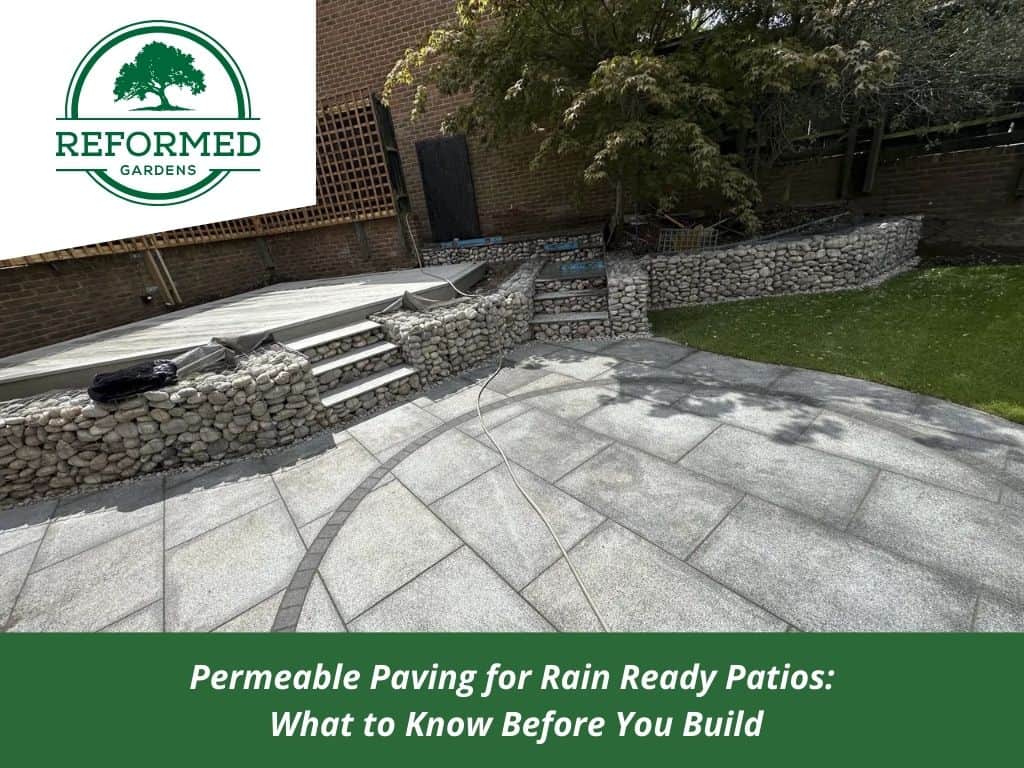
Permeable paving Muswell Hill
Permeable paving is designed to let rainwater pass through the surface and into a free draining sub base, rather than pushing water across the patio and into channels or drains. For domestic paving, this usually means permeable block systems, porous surfaces, or gravel based solutions, all intended to reduce surface runoff.
In a Muswell Hill garden, this approach can be especially valuable where levels are tight, existing drains are unreliable, or the garden layout makes it hard to hide surface channels without spoiling the look.
Who benefits most from permeable paving
Different households tend to value different outcomes. A good build balances all of them.
Busy families often prioritise safer surfaces, less puddling, and a patio that is usable more days of the year.
Senior professionals often prioritise a clean finish, low maintenance detailing, and a long life specification that still looks premium.
Landlords and investors often prioritise durability, fewer call backs, and a surface that stays presentable for viewings and tenants.
Key benefits for North London patios
Permeable paving is not a magic product. It is a system. When designed properly, the benefits are clear.
Reduced standing water, helping keep the surface cleaner and less slippery in wet spells.
Less pressure on traditional drainage points when the build up is designed to store and release water gradually.
A practical route to creating a rain ready patio without relying only on visible channels and grates.
Contributor quote from Reformed Gardens
“A patio that drains well is not just about the surface, it is about what is beneath it. The right sub base and levels are what keep paving looking sharp year after year.”
Head Landscaper, Reformed Gardens
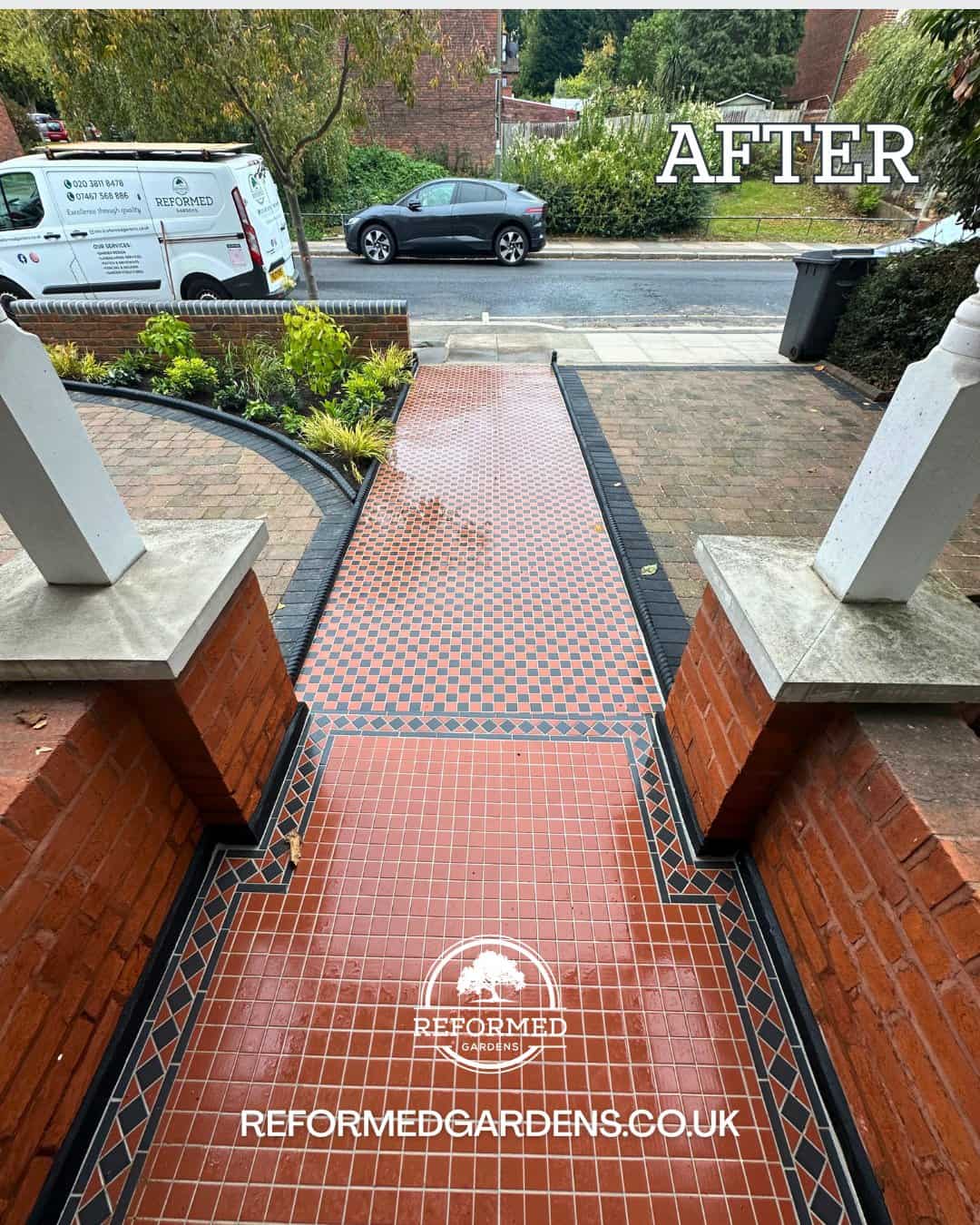
Permeable paving patio drainage solutions Finchley
Not every patio needs a fully permeable surface, but every patio needs a drainage plan. Problems usually come from two avoidable issues, paving laid too flat, and a sub base that traps moisture rather than moving it away.
A well planned fall away from the property, plus the right foundation layers, helps prevent pooling and long term movement. In Finchley gardens with clay heavy ground, this becomes even more important because water can sit in the soil for longer after prolonged rainfall.
If your paving is in a front garden and the area is over 5 square metres, government guidance notes that permeable surfacing can help avoid planning permission, whereas impermeable surfacing may require provision for runoff to a permeable area or permission. You should always check the latest guidance for your property and site conditions before committing to a build.
Choosing the right permeable paving system
The right system depends on the look you want, how you use the space, and how much maintenance you are willing to do.
- Permeable block paving systems use designed gaps and a compatible bedding and jointing material, so water can pass through while the surface remains stable.
- Gravel solutions work well where the garden style suits a softer, more natural finish, and where clear edging and stabilisation are included so the gravel stays where it should.
- Hybrid approaches combine a standard patio with intentional drainage routes into borders or a soakaway, when full permeability is not required across the whole area.
A design led approach helps here, because the paving choice should match the wider scheme, planting, lighting, and how you move through the garden.
If you want to see the range of finishes and project styles Reformed Gardens delivers, browse our Projects.
The non negotiables under the surface
Most patio failures begin below the paving. If you want a patio that still feels solid in five years, these elements are not optional.
- Excavation depth must match the intended use, expected load, and ground conditions. A small dining patio and a driveway style area require different build ups.
- A free draining sub base build up must support the paving and hold and release water correctly, rather than trapping it. This is where many cheaper quotes quietly cut corners.
- Edge restraints keep paving stable so it does not spread or loosen over time. A crisp edge is also what makes a finish look intentional and premium.
Build checks before you start
Before any materials are ordered, a good installer should be able to explain these checks clearly.
Confirm where water will go in heavy rain, and ensure it is directed away from the house and away from problematic low points.
Decide early on the finished levels at doors, steps, and thresholds so the patio feels seamless and safe.
Align paving choices with the wider garden scheme, because hard landscaping should support how the whole space functions, not sit as a separate feature.
A practical example from East Finchley
Drainage planning becomes easier to understand when you picture the end result.
In East Finchley, Reformed Gardens recently transformed Mr Khan’s garden. The old uneven lawn and cluttered base became a neat, level space with fresh turf, clean edging, new feather edge fencing, and a gravel seating area. The work was completed in a week and finished with a sleeper border and a crisp striped lawn ready for summer. The client described the team as “very professional at their work”.
That project is a useful reminder that good drainage is not only about patios. It is about levels, edges, and how every surface transitions, including gravel zones and lawn areas.
Contributor quote from Reformed Gardens
“When we plan a patio, we plan the journey of water first. If you get the falls, sub base, and edges right, the surface stays cleaner and the whole garden stays more usable.”
Horticultural Specialist, Reformed Gardens
Planning, materials, and budgeting for 2026 projects
A successful build starts with decisions made early. In Muswell Hill and Finchley, access can be tight and waste removal can be a real cost factor, so the plan matters.
Planning and programme
A typical planning sequence looks like this.
First, site visit and assessment of levels, existing runoff behaviour, and where water can safely discharge.
Second, concept choices, including surface type, edging detail, and whether you want a fully permeable system or a hybrid drainage plan.
Third, specification and scope, including excavation depth, sub base layers, waste removal, and any steps, retaining edges, or fencing.
Fourth, installation, with clear check points for falls, compaction, and edge restraints before the final surface goes down.
If you are at the early stage, start with Services to understand the options, then read About us to see how Reformed Gardens approaches design and build delivery.
Materials that last in London conditions
In London, durability is not only about strength. It is about how surfaces cope with constant moisture, shade, leaf drop, and foot traffic.
Choose materials that suit how you actually live. If you entertain often, you may prefer a surface that stays firm under dining chairs and cleans easily. If you have kids running in and out, you may prioritise slip resistance and fewer puddles.
When you use permeable systems, make sure the jointing and bedding materials are compatible with the design. Mixing systems is one of the quiet reasons permeable paving performs poorly.
Budgeting considerations and avoiding surprises
The biggest budget swings tend to come from what is hidden.
Excavation depth and disposal costs.
Sub base specification and compaction requirements.
Edging details and thresholds, especially around steps and door levels.
Drainage features such as soakaway connections or border feed routes.
If you want cost certainty, insist on a clear scope that states how falls will be formed, what layers will be used, and how runoff will be managed.

Maintenance that protects your investment
Even the best paving needs care, especially in shaded North London gardens.
What to do monthly and seasonally
A light, consistent routine beats occasional heavy cleaning.
Clear leaves, especially in autumn, because organic build up holds moisture and encourages algae.
Brush joints and check edges, particularly after winter, when freeze and thaw can loosen poorly installed sections.
Rinse gently when needed, and avoid aggressive pressure washing that can pull out jointing material or damage the surface finish.
If you want a garden that looks good year round, maintenance should be part of the plan, not an afterthought. Reformed Gardens supports long term upkeep as part of protecting the look and usability of the space.
Next steps
- Start with a site visit to assess levels, existing drainage behaviour, and the best route for runoff control.
- Make early selections on paving type, edging, and layout to improve timelines and cost certainty.
- Confirm delivery and access routes in advance to avoid rework, delays, or damage to existing areas.
FAQ
Does every patio in Finchley need permeable paving?
No. Many patios perform well with a standard surface if the falls, sub base, and runoff route are designed properly. Permeable paving is most useful where you want to reduce surface runoff and avoid persistent pooling.
What is the best first step for a rain ready patio in Muswell Hill?
Get levels and drainage behaviour checked on site, then choose the paving system that matches your garden use and maintenance preference.
How do I avoid cost surprises with patio drainage?
Confirm excavation depth, sub base specification, waste removal, edge restraints, and any steps, channels, or soakaway routes before pricing is finalised.
How long does a patio installation usually take?
Timescales depend on access, ground preparation, and materials. Clear early decisions keep installation efficient and reduce delays.
What is the main quality check for patio drainage?
Ask for a clear scope that confirms falls away from the property, a free draining sub base build up, and a stated plan for where runoff goes in heavy rain.